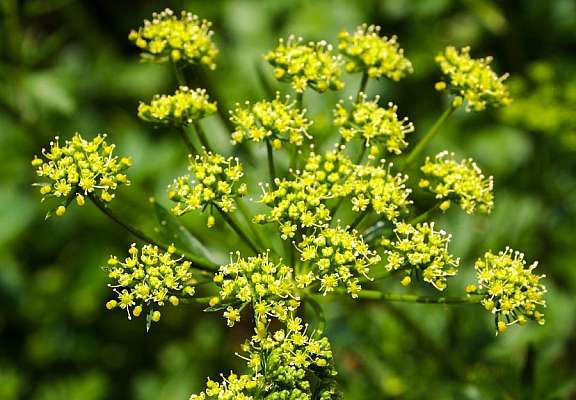
How can its spread be limited?
If you have only a few wild parsnip plants on your property, you can generally manage them yourself. Wear protective clothing, including gloves, long sleeves and pants, and handle the plants with care.
One highly effective method is to destroy the main root (taproot) using a shovel. This prevents the plant from regrowing.
For larger infestations and extensive areas affected by wild parsnip, professional assistance is strongly recommended. Several interventions, often over several years, may be necessary to eliminate the infestation.
Wild parsnip seeds can remain viable in the soil for several years. Patience is therefore essential, as complete eradication can take time. If the plants have already produced seeds, carefully cut off the flower heads and place them directly into sealed bags or containers. This helps prevent the seeds from spreading and limits further growth.
In case of contact
Immediately wash exposed skin with water and soap, then protect the affected area from sunlight for at least 48 hours. Contact Info-Santé 811 for advice, or consult a doctor if the reaction is severe, affects the face, eyes or genitals, if blisters develop, or if you experience a fever or other symptoms.
What should you do with the plant material?
Never compost or burn wild parsnip plant material.
Place the plants in a sturdy, securely closed garbage bag. Clearly label the bag to warn waste collection workers (“Wild Parsnip – Toxic”) and dispose of it with household garbage.


 Find Out Your Collection Days
 Jobs at the City
 See Sports, Leisure and Cultural Programming
 Online Requests
 Find a Location
 Contact Us

 Wild Parsnip