

 Find Out Your Collection Days
 Jobs at the City
 See Sports, Leisure and Cultural Programming
 Online Requests
 Find a Location
 Contact Us

 Health and Safety

Within just a few hours, freezing rain can turn roads into ice rinks, weigh down branches until they break, and cause major power outages. Before the storm hits, take time to prepare. Simple steps can make all the difference in keeping you and your loved ones safe.
What is Freezing Rain?
Freezing rain occurs when rain falls and freezes on contact with the ground when temperatures are below 0°C. It quickly turns into ice, making conditions especially hazardous. Roads become slippery, making travel difficult and often discouraged.
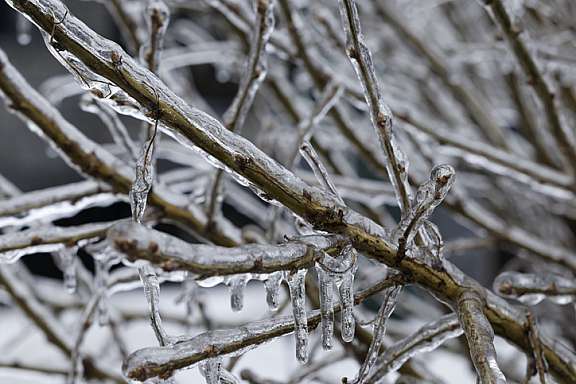
Freezing rain can also accumulate on trees, branches, and power lines. The weight of the ice may break these structures, cause damage, and in severe cases, trigger widespread power outages.
During an ice storm, it is important to adopt safe and cautious behaviours.
What Should I Do in This Situation?
Before the Storm
- Follow news updates and monitor weather forecasts.
- Prepare your 72‑hour emergency kit or ensure yours is complete and up to date.
- Charge your phone and essential electronic devices.
- Keep de-icing salt on hand to make your exits and pathways safer.
- Gather items you may need during a power outage (blankets, flashlight and batteries, water bottles, etc.).
- Check that your sump pump and generator, if applicable, are functioning properly.
- Postpone non-essential travel. If you must drive, prepare a car emergency kit with an ice scraper, blanket, booster cables, sand or cat litter.
- Consider checking in with vulnerable loved ones, such as older adults or isolated neighbours.
Important tip: If you do not have sand, you can use cat litter to help gain traction if you are stuck.
During the Storm
- Avoid non-essential travel and stay home as much as possible.
- If you must go out, watch for slippery surfaces and falling ice or branches. Reduce your speed and increase your braking distance when driving.
- Wear footwear with good traction and avoid areas under trees or power lines when walking.
- Stay informed through the City’s communications, as well as local media and radio updates for instructions to follow.
- For outdoor use only: Use fuel-burning devices (generators, barbecues) at least 3 metres away from doors and windows, to prevent carbon monoxide poisoning.
Freezing rain may cause power outages. Visit our Power Outages page to learn how to prepare and what steps to take.
After the Storm
- If you see downed power lines, stay far away and call 9-1-1 immediately so the area can be secured.
- If a branch or tree is touching power lines, contact Hydro‑Québec or emergency services at 9‑1‑1.
- Do not handle fallen branches, wait for a qualified professional.
- Be cautious when travelling, as roads and sidewalks may still be slippery or obstructed.
- Avoid wooded areas.
- Call the Inspection – Public Security Department at 514‑630‑1234 if a situation is dangerous or requires immediate assistance from the City’s Public Works teams.
- You may also submit a question or concern through our online request system or contact Pointe-Claire’s Public Works Department at 514‑630‑1230 or tp@pointe-claire.ca.
What are the Potential Risks?
Health Risks
- Cold-related health issues such as frostbite or hypothermia.
- Increased risk of carbon monoxide poisoning if fuel-burning devices are used indoors or if a vehicle is left running for an extended period.
Safety Risks
- Risk of electrocution from downed but still live power lines.
- Increased likelihood of car accidents due to icy roads.
- Slippery sidewalks and pathways for pedestrians.
Risks to Your Home
- Fallen trees or branches blocking access to your property.
- Prolonged power outages.
- Fire hazards caused by downed power lines or branches in contact with electrical wires.
What is the City’s Role?
The City continuously monitors weather conditions to anticipate potentially concerning situations. When an ice storm is expected, preventive measures are deployed, including spreading abrasives and de‑icing agents on priority roads and sidewalks.
If conditions worsen, the City mobilizes the necessary resources to minimize impacts and support the community. This may include:
- Opening warming centres and emergency shelters
- Increase tree and infrastructure maintenance teams
- Provide continuous public information before, during, and after the event.
Stay Informed
To stay updated and receive the latest instructions:
- Visit the Notices and Alerts section of our website
- Follow us on Facebook
- Sign up for our automated alert system
Other Useful Resources
- Emergency Measures (City of Pointe-Claire)
- Hydro‑Québec (Info-pannes)
- Emergency Preparedness (City of Montreal)


