

 Find Out Your Collection Days
 Jobs at the City
 See Sports, Leisure and Cultural Programming
 Online Requests
 Find a Location
 Contact Us

 Wildlife, Flora and Species
Description
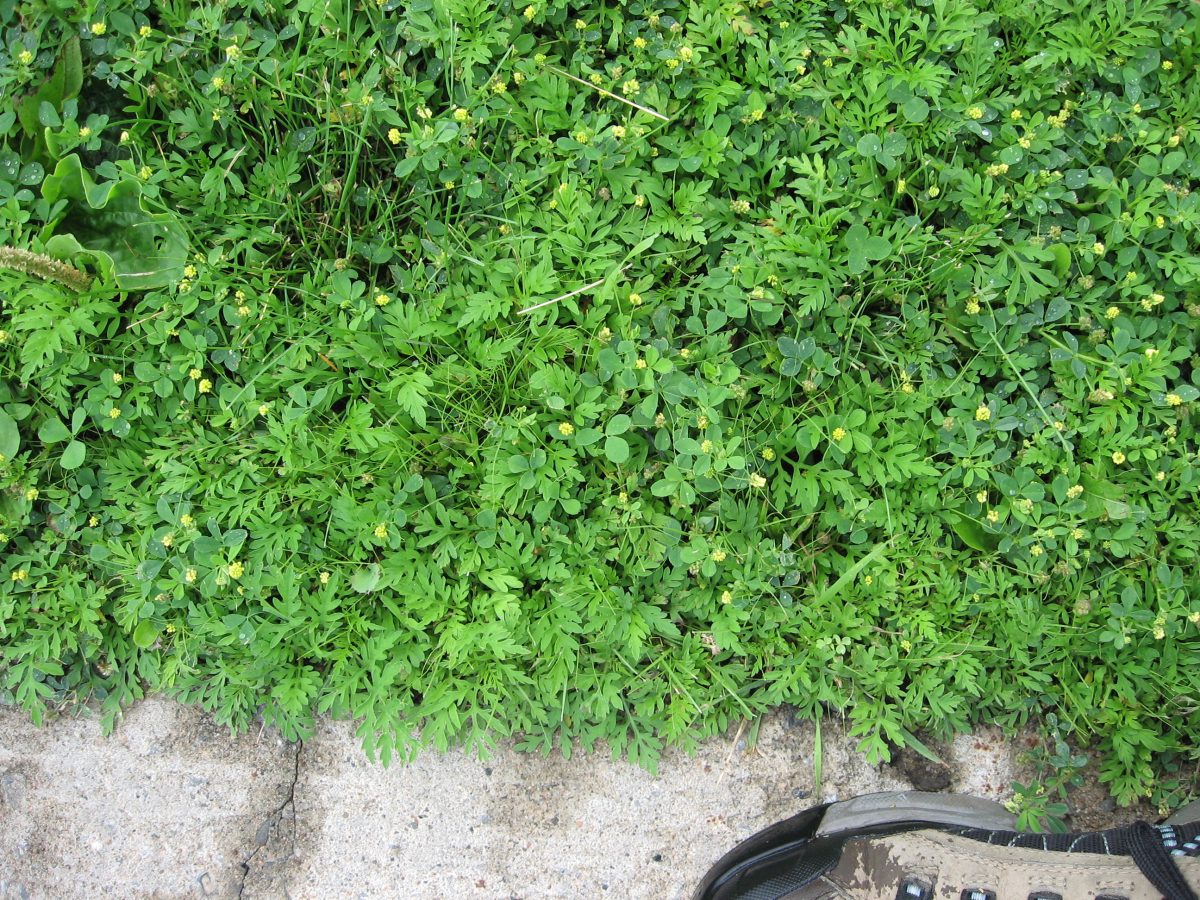
Ragweed is present from May until the first fall frost. It begins to flower around mid-July, when it releases its pollen. Carried through the air as fine dust, ragweed pollen triggers allergic reactions in sensitive individuals.
Ragweed is an annual plant, meaning it grows, flowers, and dies within a single season and does not grow back the following year. However, its seeds can remain viable in the soil for up to 40 years, making its eradication a gradual process.
Ragweed grows primarily in nutrient-poor soils. It is most commonly found along streets and sidewalks, on the shoulders of paved roads, on vacant lots, construction sites, industrial sites, and on land used for snow storage.
Giant Ragweed (Ambrosia trifida)
It is an annual plant that grows up to 1.5 m tall (occasionally up to 4 m). It is very hairy, with thick, sturdy stems and leaves divided into three to five lobes. In summer, it produces long clusters of male flowers that release large amounts of pollen, followed by dry fruits (achenes) in the form of small, pointed capsules.
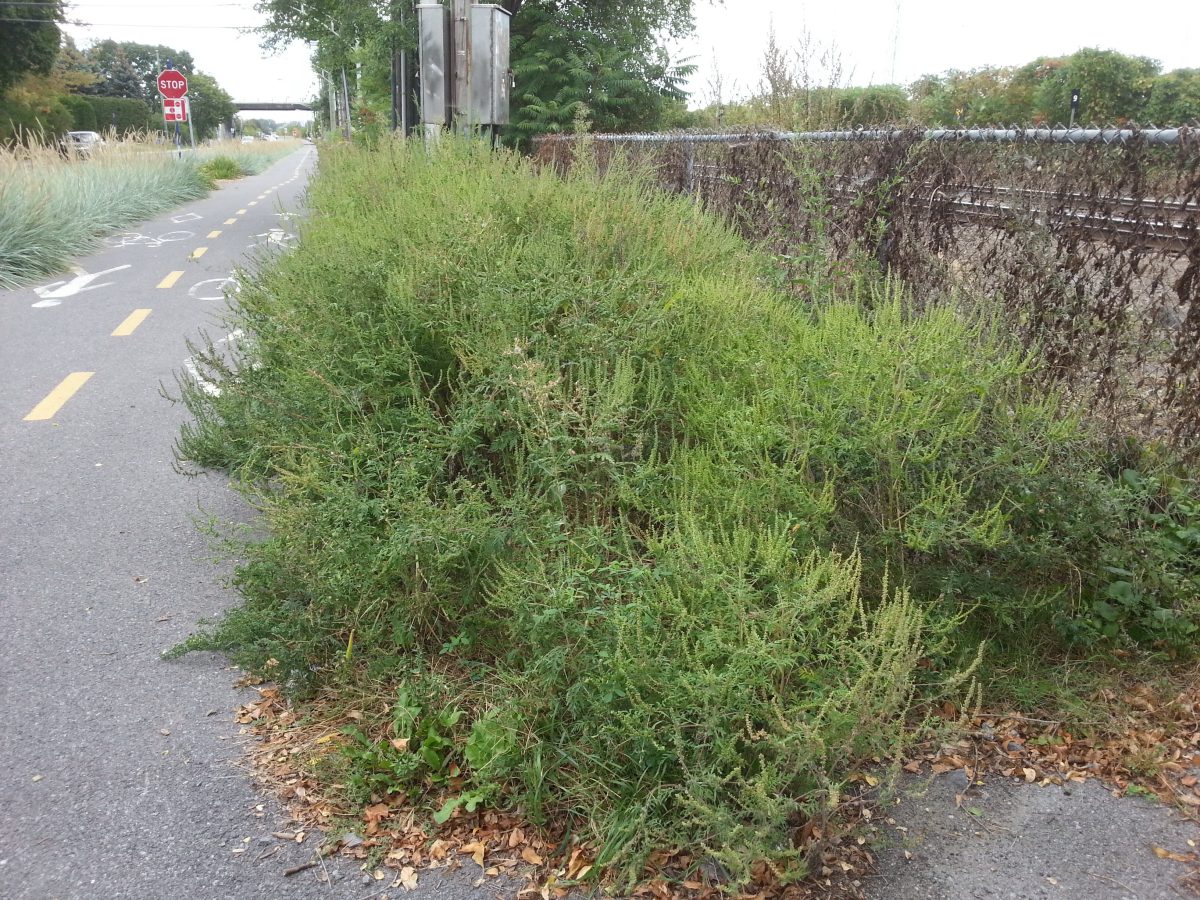
Common Ragweed (Ambrosia artemisiifolia)
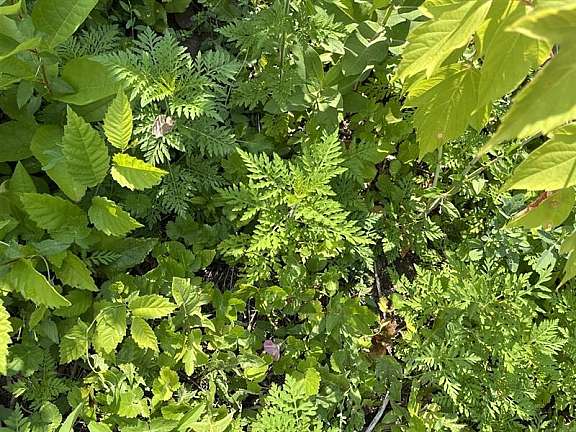
Common ragweed is smaller, typically growing from 10 cm to 1.5 m tall. It has hairy stems and finely divided leaves that resemble carrot leaves. It flowers in July, producing greenish-yellow male flower spikes that are highly allergenic and release millions of pollen grains until the first frost. The best time to remove ragweed plants is in mid-July, before they begin to flower.
How to limit its presence
Pulling or Mowing Ragweed
It is recommended to remove ragweed as soon as it appears. You can do so:
- By hand;
- Using a gardening tool, such as a hoe, to ensure the root is removed.
Preventing ragweed growth
Ragweed has difficulty growing in rich, well-maintained soils. Here are a few ways to prevent its growth:
- Use mulch or ground-cover plants in areas without grass;
- Improve soil quality by adding compost or fertilizer;
- Seed bare areas or plant other types of vegetation.
What to do with plant debris?
Never compost ragweed: its seeds can contaminate compost.
Dispose of pulled plants with household waste. If the plants have already produced flowers or seeds, place them in a sealed bag before throwing them away.


