

 Find Out Your Collection Days
 Jobs at the City
 See Sports, Leisure and Cultural Programming
 Online Requests
 Find a Location
 Contact Us

 Wildlife, Flora and Species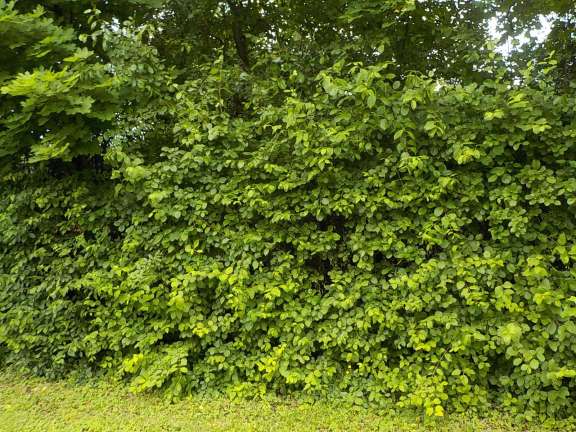

Description

Buckthorn is a shrub that grows 2 to 5 metres tall, sometimes reaching up to 8 metres. It forms very dense thickets, even in winter, preventing other plants from growing naturally around it. It is commonly found in woodlands, parks, and along urban areas.
When mature, its trunk can reach up to 25 cm in diameter. Its bark is smooth and glossy, with small white lines (called lenticels), and the inside of the wood is orange.
Common Buckthorn
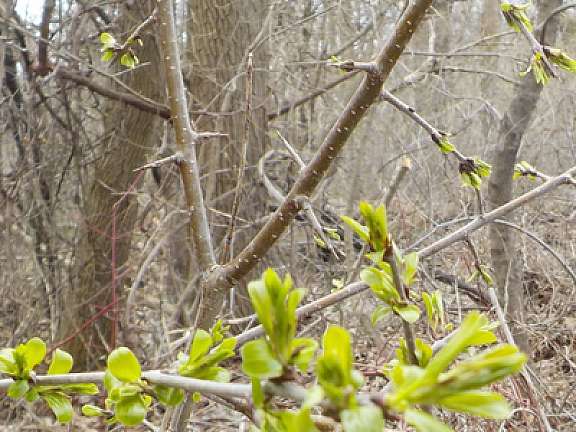
Buckthorn has grey-brown bark with small white spots (lenticels) that help it breathe. Its branches sometimes have small thorns, and when the trunk is cut, new stems can regrow from the base.
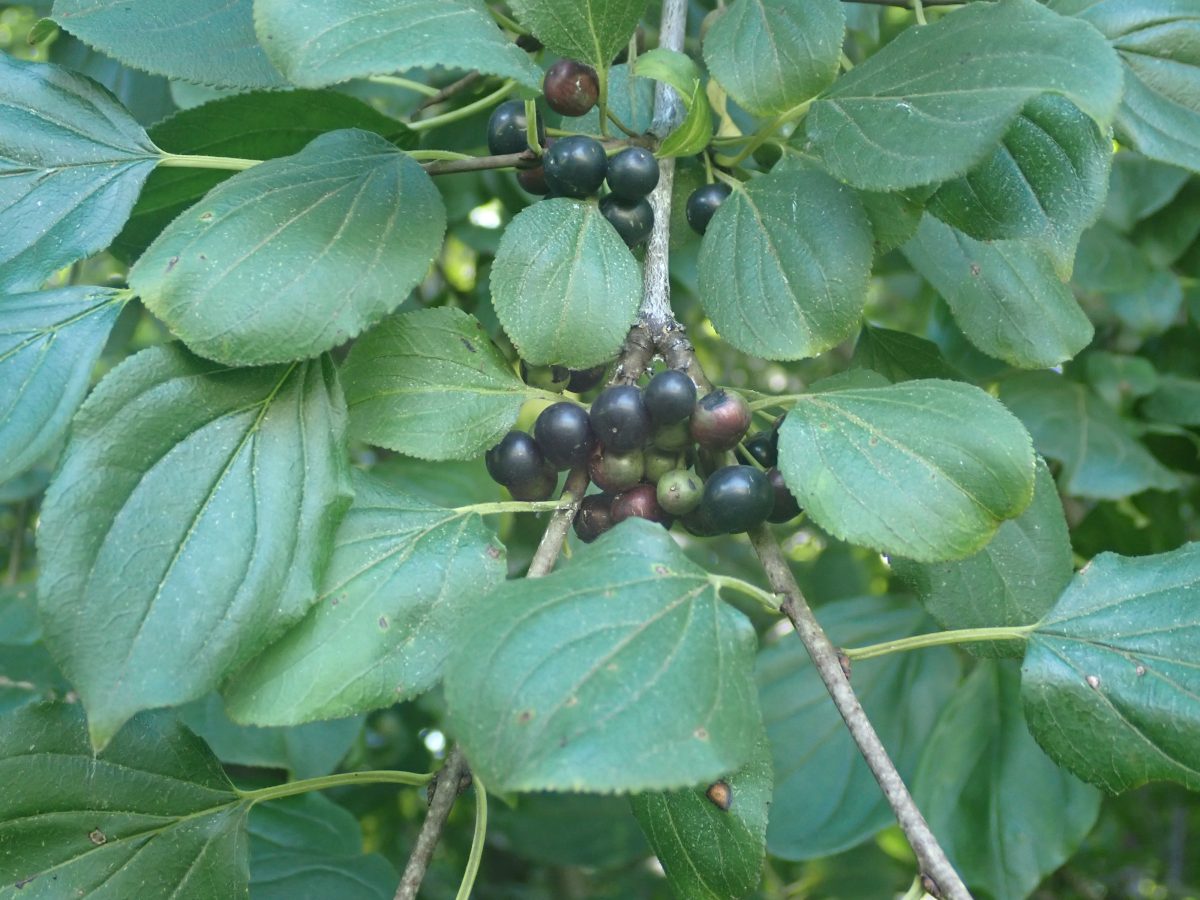
Its leaves are oval-shaped, with toothed edges, and grow in pairs. They measure 2 to 6 cm in length, are dark green on the upper surface, and paler underneath. In spring, small yellowish-green flowers appear at the base of the leaves. Male and female flowers grow on separate plants.
In summer, the shrub produces small round fruits that are initially green, then turn black when mature (0.5 to 1 cm). They fall in autumn, but some remain on the branches throughout the winter.
Glossy Buckthorn
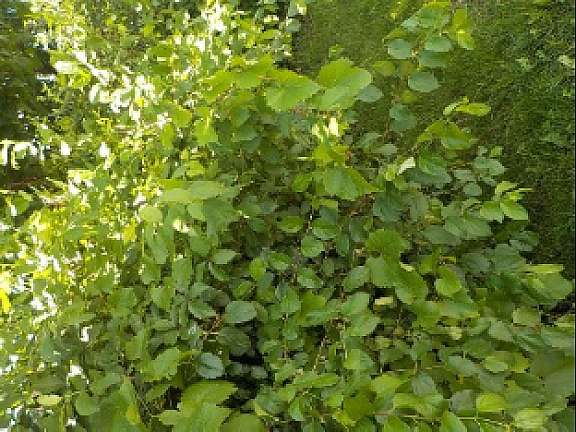
Glossy buckthorn has grey-brown bark marked with small white spots (lenticels) that allow the plant to breathe. The thick stems may be slightly cracked, and young shoots are sometimes hairy. When the trunk is cut, new stems regrow from the base.
Its leaves are oval-shaped, glossy, dark green, and measure between 4 and 7 cm. They grow alternately along the stems and remain green late into the fall, sometimes until they turn yellow. From May to September, small yellow-green, bell-shaped flowers appear. They contain both male and female reproductive parts and grow individually or in small clusters at the base of the leaves.
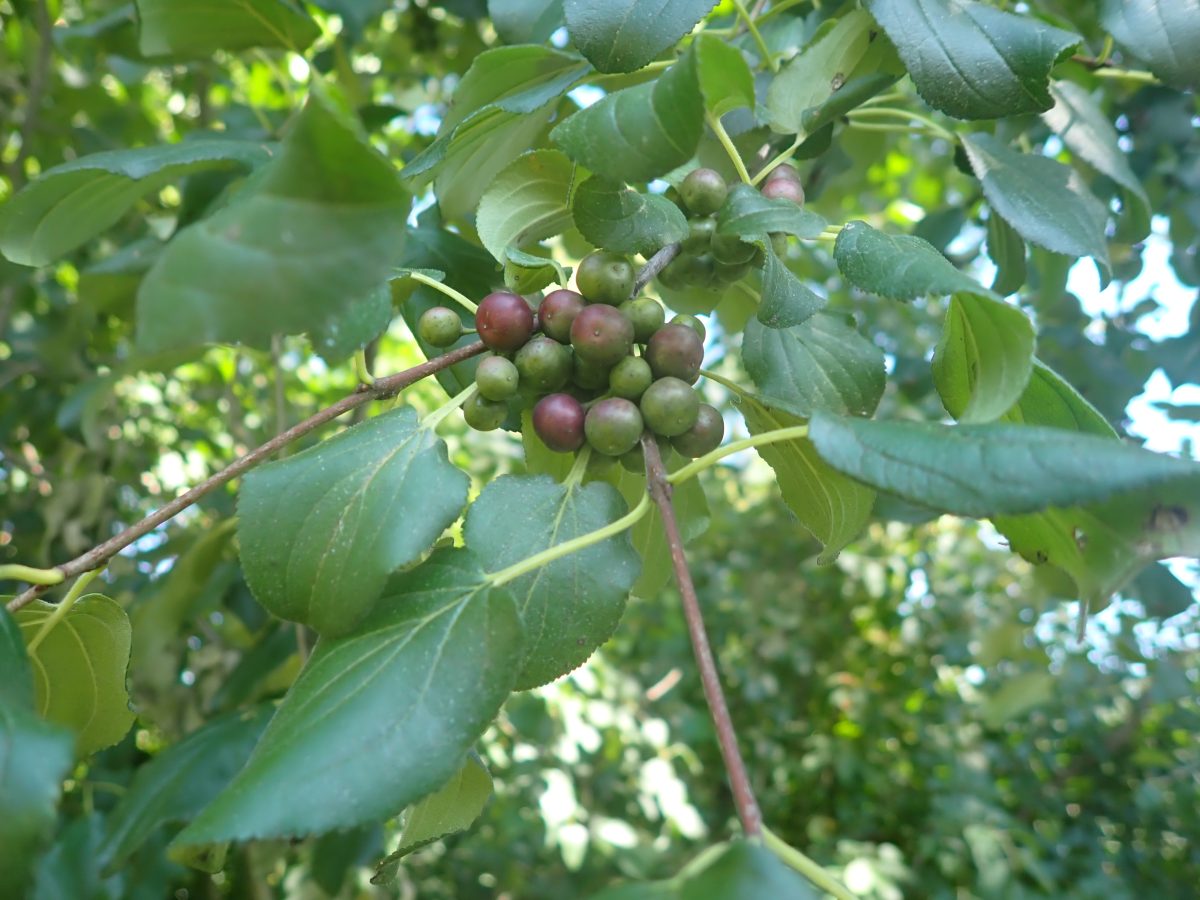
Its fruits are small, fleshy berries (0.5 to 1 cm) that change colour as they ripen: first green, then red, and finally black. The same plant can have fruits of different colours at the same time.
Why remove it?
These plants hinder the growth of ornamental and native vegetation by creating shade and disrupting forest regeneration. Their rapid growth, dense root systems, and ability to produce suckers pose a significant challenge for surrounding vegetation, as they quickly colonize available space and prevent other plants from becoming established.
Buckthorn spreads easily and rapidly invades large areas, where it can eventually become the only species present. Birds and small mammals contribute to its spread by feeding on its fruits and dispersing its seeds. The seeds can remain viable in the soil for up to five years, requiring regular monitoring to eradicate the species. In addition, cutting the plant stimulates the growth of numerous new shoots, making control efforts even more challenging.


