

 Find Out Your Collection Days
 Jobs at the City
 See Sports, Leisure and Cultural Programming
 Online Requests
 Find a Location
 Contact Us

 Wildlife, Flora and Species

Warning: contains a toxic substance that causes painful skin reactions upon contact. In case of exposure, immediately wash the affected area with cold water and a degreasing soap, and contact Info-Santé 811.
Votre navigateur web est configuré pour le français.
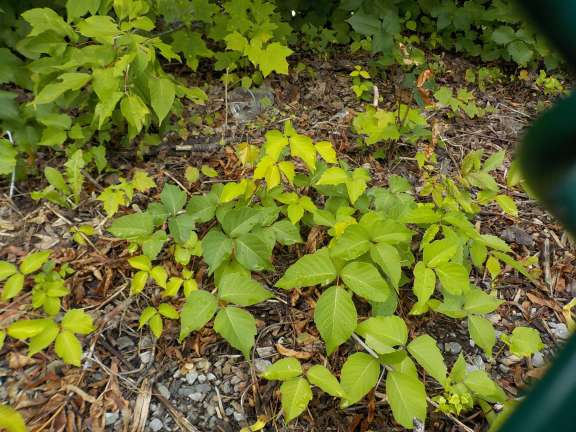
Poison ivy is a native perennial plant found throughout all regions of Quebec. It is easily recognized by its glossy leaves, which grow in groups of three leaflets. In spring, its young leaves are generally reddish, while in summer, the foliage becomes dark green and glossy. In autumn, the leaves turn various shades of yellow, orange, or red.
The toxic sap of poison ivy can cause a skin reaction in most people who come into contact with the plant.
Warning: contains a toxic substance that causes painful skin reactions upon contact. In case of exposure, immediately wash the affected area with cold water and a degreasing soap, and contact Info-Santé 811.
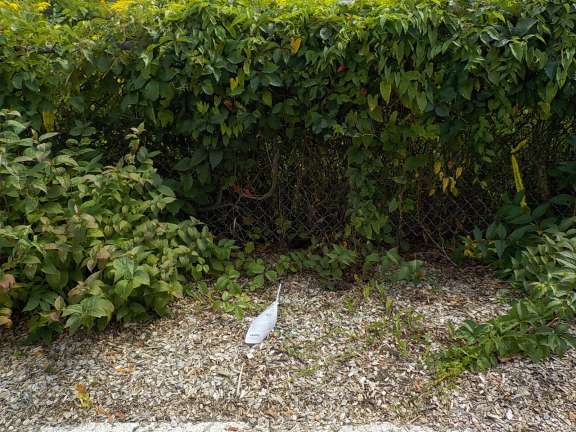
Found throughout all regions of Québec, poison ivy grows in a wide variety of environments. It is a perennial plant that generally takes the form of a small shrub, although a climbing variety is also found in southwestern Québec.
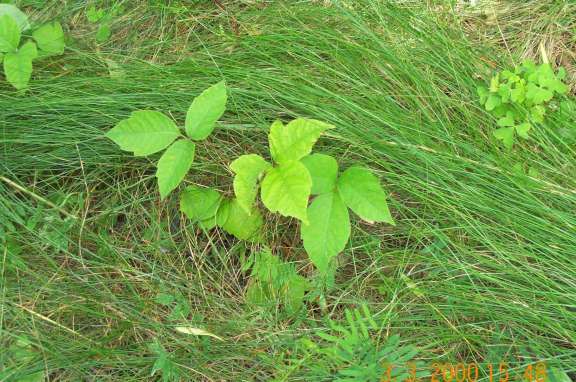
The leaves of poison ivy are glossy and consist of three pointed leaflets. The central leaflet has a noticeably longer stem than the two others. The edges of the leaves may be smooth or slightly toothed.
Their colour varies depending on the season:
In June and July, poison ivy produces small clusters of cream-coloured flowers.
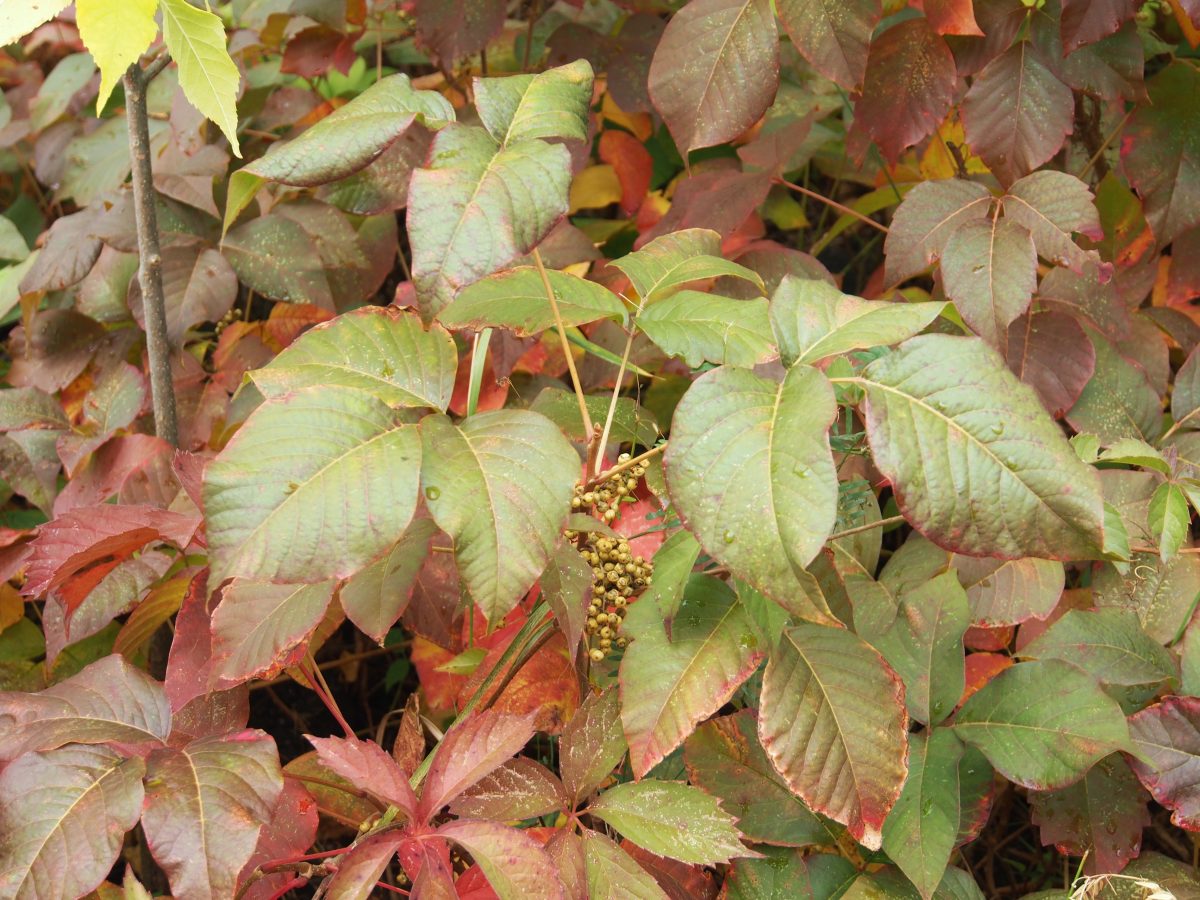
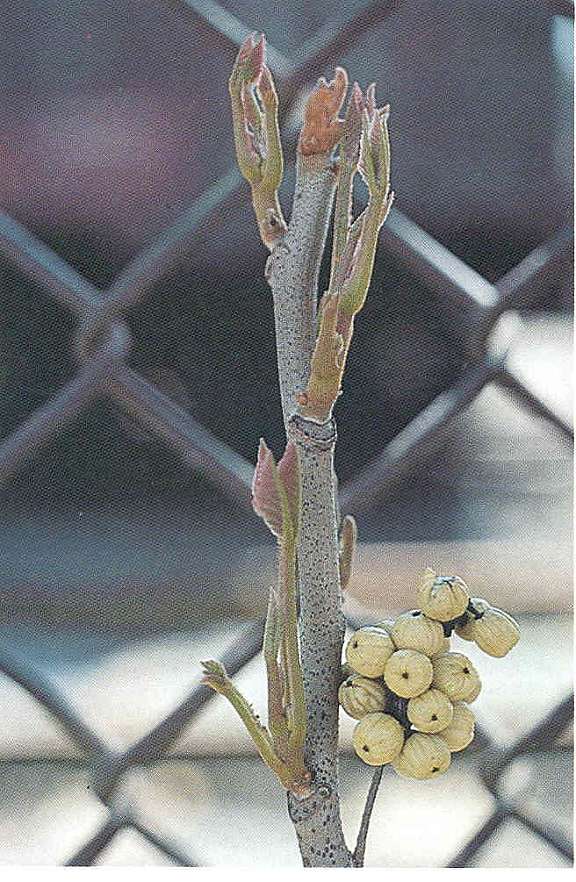
In September, poison ivy produces round, waxy fruits grouped in clusters, whose colour ranges from green to yellow.
It can reach a height ranging from 20 centimetres to 1 metre. It spreads either through its seeds or through an extensive network of underground stems, making it a particularly invasive plant.
The sap of poison ivy contains urushiol, a toxic substance found in all parts of the plant (leaves, stems, roots, and fruits). Upon contact with the skin, it causes intense itching, redness, swelling, and a burning sensation.
Removing poison ivy requires special precautions due to the toxicity of its sap. Before taking any action, consult the official guide from the Government of Québec, which outlines recommended methods, required protective equipment, and safe disposal of the plants.
Identifying and removing poison ivy
Poison ivy roots are generally found 10 to 15 cm below the soil surface. The plant can also spread through underground stems. To limit its growth, it is therefore important to completely remove the plants, making sure to remove the roots, especially around infested areas.
Immediately wash exposed skin with cold water and a degreasing soap. Contact Info-Santé 811 for advice, or consult a doctor if the reaction is severe or affects the face, eyes, or genitals.
Never compost or burn the waste.
Place the plants in a sturdy, tightly closed garbage bag, clearly label the bag to warn waste collectors (“Poison Ivy – Toxic”), and dispose of it with household garbage.


